 Ilford Electrical Services
Guide
How Long an EICR Takes and What Is Involved
An EICR on an average home commonly takes a few hours. Here is what the electrician tests, what you need to prepare and what happens afterwards.
- Send a short enquiry
- Covering Greater London
- EICR and related services
An EICR (Electrical Installation Condition Report) on a typical home commonly takes a few hours, and larger properties or those with many circuits can take a full day. The electrician inspects and tests the fixed wiring, consumer unit and circuits, then writes up a report on their condition. Ilford Electrical Services covers Ilford and the wider Greater London area for this kind of work.
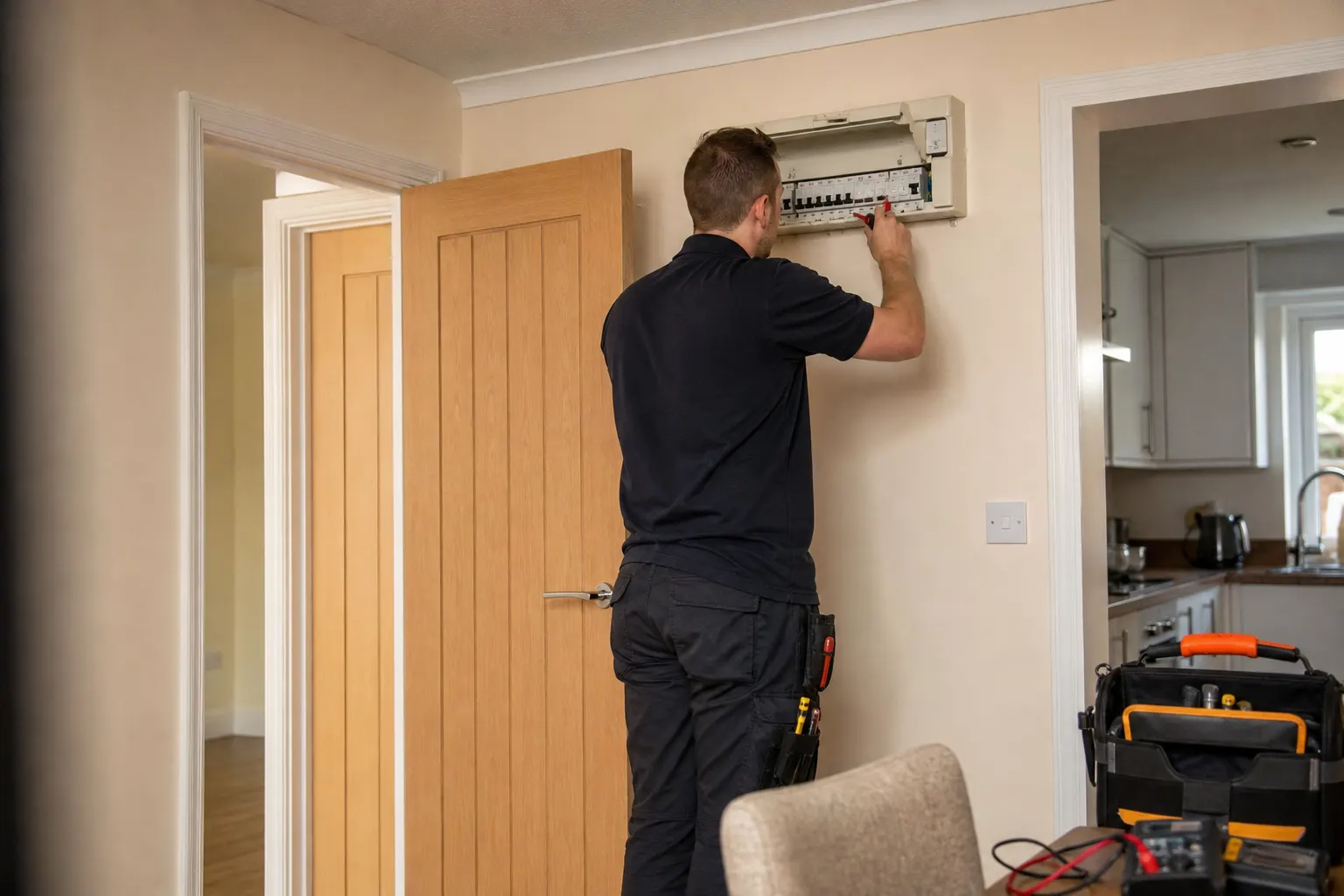
What decides how long an EICR takes
The main factor is the number of circuits and outlets to be tested. A flat with one consumer unit is quicker than a three-bedroom house with an extension, garage or garden supply. A small commercial unit can be quick or slow depending on its size and layout.
Access matters too. Furniture in front of sockets, locked rooms, loft hatches that are hard to reach or a consumer unit hidden behind stored items all add time. So does wiring that is poorly labelled or has been altered over the years, because the electrician has to trace which circuit serves what.
The condition of the installation also plays a part. If faults turn up, the electrician needs extra time to investigate and record them properly.
What is involved on the day
The visit starts with a visual inspection. The electrician looks at the consumer unit, earthing and bonding, switches, sockets, light fittings and any visible cables for damage, overheating or signs of unsafe DIY work.
Next come the tests, carried out with calibrated test equipment. These check things such as continuity of the circuits, insulation resistance, earth fault loop impedance and the operation of RCDs. To do this safely, the power is usually switched off to sections of the property in turn, then back on for live tests.
Every circuit is tested and the results are recorded. Expect the electrician to move through each room, so they will need access to all of them.
How to prepare so it runs smoothly
Clear space around the consumer unit and make sure every room can be entered, including cupboards, sheds and garages if they have electrical supplies. Tell the electrician about any known problems, such as tripping circuits, flickering lights or warm sockets.
Plan for power cuts during the visit. Save work on computers, and think about anything that must stay on, such as a freezer, medical equipment, broadband or alarms. Ask beforehand how long the supply may be off at a time. Tenants should be given notice if the report is for a rented property.
If you have previous electrical certificates or an earlier EICR, keep them to hand. They help the electrician understand what has changed.
The report and what happens if you fail
After the testing, you receive a written report. It lists observations with a classification code. C1 means danger is present and immediate action is needed. C2 means potentially dangerous. C3 means improvement is recommended. FI means further investigation is required. The overall result is either satisfactory or unsatisfactory.
An unsatisfactory result is not a punishment, but it does mean remedial work is needed. Typically that covers any C1 or C2 items and any FI items. Once the work is done, the installation is usually re-tested on the affected parts and the report updated. Landlords in particular should act promptly, as they have duties to tenants. Rules can change, so check GOV.UK for the current position.
How pricing works
EICRs are usually quoted as a fixed price for the job, but what goes into that quote varies. The number of circuits, the size and type of property, how easy access is and whether the electrician has to return all affect it. Some firms charge for the visit and testing separately from any repair work that follows.
Remedial work is normally priced separately from the inspection, since nobody knows what is needed until the testing is done. Parts and extra labour depend on what the report finds. Ask for a written quote that states clearly what the inspection includes, and ask how repairs will be priced if the report is unsatisfactory.
How long an EICR lasts
An EICR is a snapshot of the installation on the day. The recommended gap before the next one depends on the property and is stated on the report. It is commonly longer for an owner-occupied home and shorter for rented homes and some commercial premises. Landlords should check the current requirements on GOV.UK.
A new inspection may be sensible sooner if you buy a property, carry out major work or notice warning signs such as scorch marks or repeated tripping.
Common questions
What does EICR stand for?
It stands for Electrical Installation Condition Report. It records the condition of the fixed wiring and associated equipment in a property, not portable appliances. Those are covered by PAT testing.
How long does an EICR take for a 3-bedroom house?
It commonly takes a few hours, depending on the number of circuits, access and the age of the wiring. Ask the electrician for an estimate after describing the property. The report is written up after testing.
What happens if you fail an EICR?
The report will list the faults and their codes. Dangerous or potentially dangerous items need remedial work, and the affected parts are usually re-tested afterwards. Ask for a written quote for the repairs.
Is an EICR the same as PAT testing?
No. An EICR tests the fixed installation, such as wiring, circuits and the consumer unit. PAT testing checks portable appliances, such as kettles and power tools. Some properties and businesses need both.
Useful sources
- NICEIC: The electrical contracting body, with a register to check an electrician.
- GOV.UK: electrical safety standards in the private rented sector: The official guidance for landlords, tenants and councils on electrical safety checks.