 Ilford Electrical Services
Guide
How much does an EICR cost?
EICR costs depend on property size, number of circuits, age, access and how the electrician prices the job. Here is what to ask for in a written quote.
- Send a short enquiry
- Covering Greater London
- EICR and related services
The cost of an EICR depends mainly on the size of your property, the number of circuits, the age and condition of the electrical installation, and how the electrician structures their pricing. We cannot give a fair figure without knowing those details, so the sensible route is to ask for a written quote based on your property. Below we explain what moves the price and what a good quote should spell out.
What an EICR is, and why the price varies
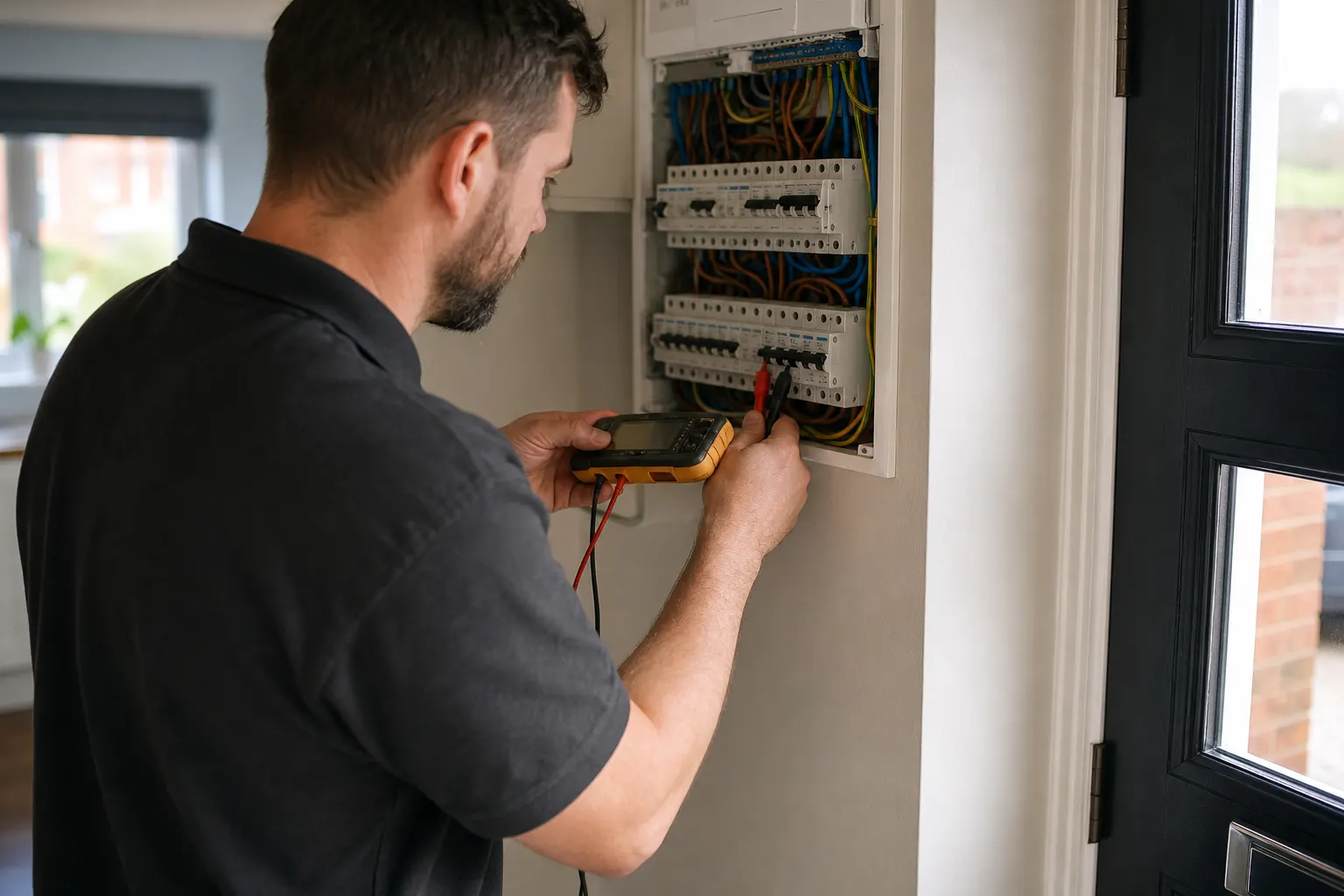
An EICR is an electrical installation condition report. An electrician inspects and tests the fixed electrical installation, including the consumer unit, wiring, sockets, lighting circuits and earthing and bonding, then records the findings in a condition report. It is an inspection of what is already there, not a repair job.
Because every building is wired differently, there is no single cost that fits every home. A small flat with a handful of circuits is a different job from a large family house that has been extended over the years. Anyone quoting an eicr cost without asking about your property is guessing.
Property size and number of circuits
The biggest factor is usually the number of circuits. Each circuit needs to be tested, so more circuits means more testing time. Property size matters mainly because bigger homes tend to have more circuits, more sockets and more lighting points to check.
A sample of accessories is inspected, and the electrician may need to open some of them up. A larger property takes longer to work through, and time is what most pricing is built on. When you ask for a quote, have ready the number of bedrooms, whether there are outbuildings such as a garage or garden office, and how many consumer units you have.
Age, condition and access
Larger or older properties often take more time. Older properties may have outdated wiring, a mix of different installation styles, or alterations that nobody documented. Tracing circuits in those homes can be slower, particularly if the consumer unit is not clearly labelled.
Access matters too. Furniture in front of sockets, locked rooms, a loft or under-stairs cupboard that is hard to reach, or a tenant who is not home can all add time. Clearing access beforehand and making sure the electrician can reach the consumer unit and every room helps keep the job straightforward.
How electricians structure their pricing
Some electricians quote a fixed price for the inspection after asking about your property. Others charge by the hour, and some add a callout fee. None of these is automatically better, but you should know which one you are being offered.
When comparing quotes, check these points:
Whether the price is fixed or based on time.
Whether any callout or travel charge is added.
Whether the written report is included.
Whether the quote assumes a certain number of circuits, and what happens if there are more.
Whether evenings or weekends cost differently from standard working hours.
A written quote that answers these questions lets you compare like with like, rather than comparing a headline figure that leaves things out.
Remedial work and retesting
The inspection fee covers the inspection and the report. If the report lists issues, such as observations that are potentially dangerous or items needing improvement, putting them right is remedial work and is usually priced separately. Ask whether remedial work would be quoted before it starts, so you can decide what to do.
The report uses classification codes to show how urgent each finding is. An unsatisfactory result is not unusual on older installations, and it simply tells you what needs attention. Some of that work may be small, but you will not know until the inspection is done. Ask whether a follow up check is needed once repairs are complete, and whether it is priced separately.
When you need one, and who should do it
Landlords generally need to have the electrical installation inspected and tested at regular intervals, commonly at least every five years, and to provide the report to tenants. Homeowners are often advised to have one when buying or selling, or if the property is older and has not been checked for a long time. Rules can change, so check GOV.UK for the current position, especially if you are a landlord.
Choose an electrician who is qualified to carry out inspection and testing, and ask what qualifications and scheme membership they hold. Ilford Electrical Services provides EICR work for customers in Ilford and across the wider Greater London area. To get a price for your own property, send the details through the enquiry form and ask for the quote in writing.
Common questions
Can I get an EICR price without someone visiting?
Often yes, if you can describe the property: its type, number of bedrooms, number of consumer units and any outbuildings. The electrician may adjust the quote if the real number of circuits differs from what you expected, so ask how that would be handled.
Does the cost include fixing problems the report finds?
Usually not. The inspection fee covers testing and the report. Remedial work is separate electrical work, so ask for it to be quoted before it goes ahead.
How long does an EICR take?
A smaller home may take a few hours, while larger or older properties can take longer. The number of circuits and how easy it is to reach everything are the main factors. Your electrician can give you an estimate once they know the property.
Can any electrician do an EICR?
Not every electrician is suitable. Inspection and testing needs specific knowledge and equipment, so ask about their qualifications in this area and whether they belong to a recognised competent person scheme.
Useful sources
- NICEIC: The electrical contracting body, with a register to check an electrician.
- Citizens Advice: Free, independent advice on your rights when paying for work.