 Ilford Electrical Services
Guide
What is an EICR?
An EICR is an Electrical Installation Condition Report: an inspection record of whether a property's wiring and fixed electrics are safe and meet standards.
- Send a short enquiry
- Covering Greater London
- EICR and related services
An EICR is an Electrical Installation Condition Report. It is a formal record, produced by a qualified electrician after an inspection and testing, of the condition of the fixed electrical installation in a property. It tells you whether the wiring and equipment such as the consumer unit are safe to keep using, and lists anything that needs attention.
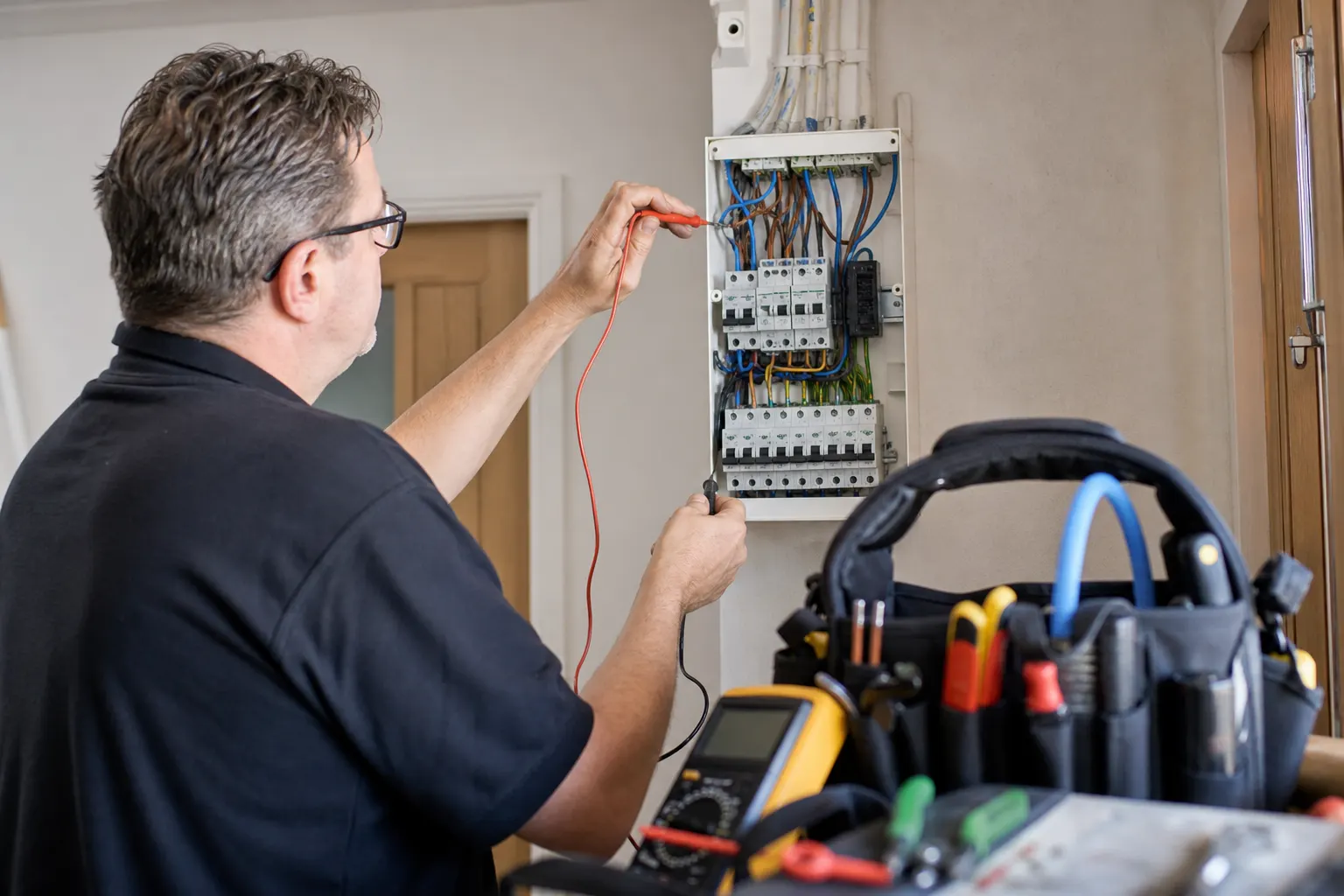
What an EICR actually covers
The report looks at the fixed electrical systems in a building: the consumer unit (fuse box), circuits, wiring, sockets, light fittings, switches and earthing and bonding. It does not cover plug-in appliances such as kettles or washing machines. Those fall under separate portable appliance testing.
The purpose is to find damage, wear, overloaded circuits, poor earthing and anything that could cause shock or fire. It also checks the installation against the wiring standards used by electricians in the UK. Older work is not automatically a fail, but it is judged on whether it is safe now.
What happens during the inspection
The electrician starts with a visual inspection, then carries out tests on each circuit. Power is usually switched off in sections while testing is done, so expect some interruption. It helps to save work on computers and plan around anything that must stay on, such as a freezer.
Good access matters. Clear the area around the consumer unit and make sure the electrician can reach sockets, light fittings and any outbuildings with their own supply. Locked rooms, stored furniture and hidden fuse boards slow things down.
How to read the result
The report gives an overall outcome of satisfactory or unsatisfactory. Any problems found are given a code:
C1 means danger is present and risk of injury exists, so immediate action is needed. C2 means potentially dangerous and urgent remedial work is required. C3 means improvement is recommended. FI means further investigation is required without delay.
A C1, C2 or FI code normally means an unsatisfactory report until the issue is put right. A C3 on its own does not usually make a report unsatisfactory. Ask the electrician to explain each item in plain language and to confirm what is urgent and what can wait.
Who needs an EICR and how often
Anyone can have one, and it is a sensible check for a home with older wiring or when you move into a property. Landlords are the group most often required to have one, because rented homes carry legal duties around electrical safety. The rules differ between England, Scotland, Wales and Northern Ireland, and they can change, so check GOV.UK for the current position before relying on any summary.
For homeowners there is generally no automatic requirement, but the report suggests a retest interval based on the condition it finds. Rented homes are commonly retested within a set period or sooner if the report says so. Buyers and mortgage lenders sometimes ask for a recent report, and a solicitor can advise whether one is needed for a sale.
How long it takes and how pricing works
The time depends on the size of the property and the number of circuits. A small flat is quicker than a large house with outbuildings, and difficult access or a cluttered consumer unit adds time. Any remedial work found is separate from the inspection itself.
For cost, you will usually be quoted either a fixed price for the inspection or a rate based on time. What moves the figure: the number of circuits and rooms, the age and layout of the installation, access, how far the electrician has to travel, and whether the visit is at a standard or out-of-hours time. Repairs, parts and retesting after fixes are normally priced separately. Ask for a written quote that states what is included, and check whether a written report is provided at the end.
Common questions
What is an EICR certificate?
People often say certificate, but the document is a report. It records the condition of the fixed electrics, gives an overall satisfactory or unsatisfactory outcome and lists any coded observations that need action.
Can I sell my house without an electrical safety certificate?
In general there is no automatic requirement for a homeowner to hold an EICR to sell. Buyers or their lenders may still ask for one, so speak to your solicitor and check GOV.UK for the current rules.
How long does an EICR test take?
It varies with the size of the property, the number of circuits and how easy everything is to reach. Smaller homes are quicker and larger or older properties take longer. Ask the electrician for an estimate when you request a quote.
How much does an EICR cost?
It depends on the property size, number of circuits, access and the time of the visit, and whether it is a fixed price or time-based. Ask for a written quote that sets out what is included.
Useful sources
- NICEIC: The electrical contracting body, with a register to check an electrician.
- GOV.UK: electrical safety standards in the private rented sector: The official guidance for landlords, tenants and councils on electrical safety checks.