 Ilford Electrical Services
Guide
How often should an EICR be carried out?
Most rented homes and commercial premises need an EICR at least every five years, while owner-occupied homes are commonly checked about every ten years.
- Send a short enquiry
- Covering Greater London
- EICR and related services
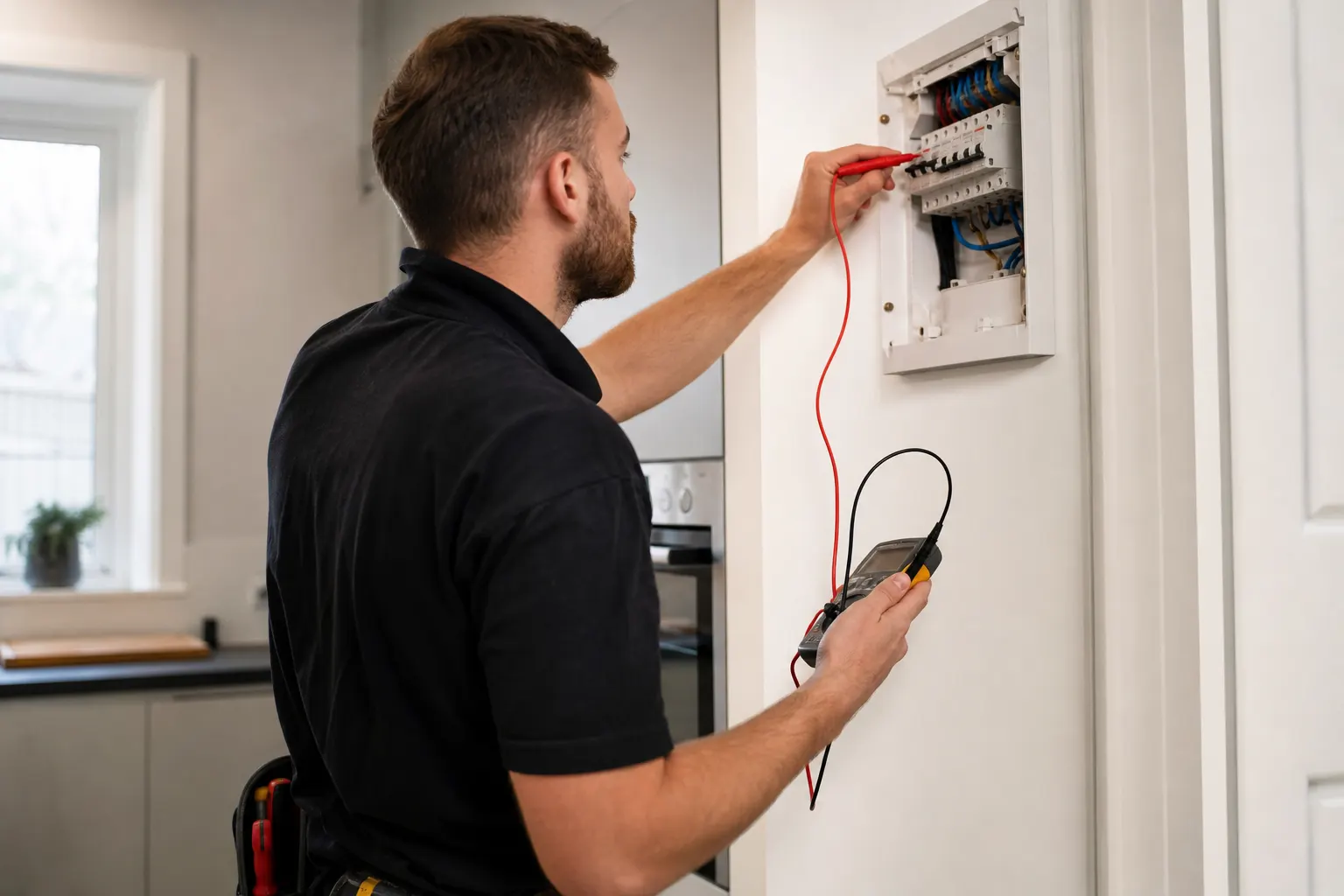
For most rented homes and commercial premises, an EICR (electrical installation condition report) should be carried out at least every five years, or sooner if the previous report says so. For a home you live in yourself, a gap of around ten years is commonly recommended, and less if the wiring is older or you have concerns. The right interval depends on the type of property, how it is used and what the last inspection found.
The short answer by type of property
There is no single interval that suits every building. As a general guide:
Private rented homes: at least every five years, and at the start of a new tenancy if the previous report has run out or is due.
Owner-occupied homes: commonly about every ten years, or when you buy or sell a property.
Commercial premises: usually about every five years, though busy or higher-risk sites often need shorter gaps.
The report itself will state a recommended date for the next inspection. That date is the one to follow, because the inspector has seen the actual wiring and consumer unit rather than working from a general rule.
Landlords and tenants: five years, not three
People often ask whether an EICR is three years or five years. For a typical rented home the figure is five years at most. Some reports recommend a shorter period, such as three years, when the installation is satisfactory but showing signs of age or wear. If your report gives an earlier date, treat that as your deadline.
Landlords must have the electrical installation inspected and tested by a competent person and must provide tenants with a copy of the condition report. The rules differ between the UK nations and can change, so check GOV.UK for the current position before relying on any summary, including this one.
The five years refers to electrical testing only. It is not connected to decorating or other upkeep, which depends on the tenancy agreement.
Homes you live in: when to test sooner
No fixed legal requirement usually applies to an owner-occupied home, but regular testing is still sensible. Consider booking an inspection earlier if:
You have just bought a property and have no report from the seller.
The wiring looks old, or the home has an outdated fuse board or consumer unit.
You notice flickering lights, warm sockets, tripping circuits or a burning smell.
You are planning an extension or major renovation.
The property has had a lot of DIY electrical work over the years.
An EICR checks the condition of the fixed wiring and its protective devices. It does not test appliances, so it is not a substitute for checking your own kit.
Commercial premises and specialist buildings
Shops, offices, workshops and other commercial premises are usually advised to have an inspection about every five years. Employers and building managers have duties to keep electrical systems safe, and an up-to-date condition report is the usual way to show it.
Some settings call for shorter intervals because of how they are used, such as healthcare buildings, places with damp or dusty conditions, or sites with heavy equipment. If you manage a premises like this, the interval is normally set by the type of use and the person responsible for the building, so check what applies to you rather than assuming five years is enough.
How long a report stays valid and what happens after
An EICR is valid until the next inspection date written on it, unless something changes. A major alteration, new circuits, a consumer unit replacement or damage to the installation can all mean you should have it looked at again sooner.
Reports grade findings with observation codes. C1 means danger is present, C2 means potentially dangerous, and FI means further investigation is needed. Any of these makes the report unsatisfactory. C3 is a recommendation for improvement and does not on its own fail the report.
If remedial work is needed, it should be completed within the timescale set out in the report or the rules that apply to your property. Once the work is done, you should receive written confirmation, and landlords should keep records to pass to tenants or the local authority if asked.
Ilford Electrical Services carries out EICR inspection and testing and covers Ilford and the wider Greater London area.
Common questions
How long is an EICR valid for in the UK?
It is valid until the next inspection date shown on the report. For rented homes and commercial premises that is usually no more than five years, and sooner if the inspector recommends it or the installation changes significantly.
How often does an EICR need to be done on a rental property?
At least every five years, and sooner if the report gives an earlier date. Landlords must give tenants a copy. Rules can change and differ across the UK, so check GOV.UK for the current position.
Do EICR rules differ from year to year?
Rules can be updated, so a guide that quotes a particular year may be out of date. Always check GOV.UK for the current requirements and follow the next inspection date on your latest report.
How often should an EICR be carried out in healthcare or other specialist premises?
Intervals are often shorter than for ordinary commercial premises and depend on the use of the building. The person responsible for the premises should confirm what applies, and the inspector's recommended date on the report should also be followed.
Useful sources
- NICEIC: The electrical contracting body, with a register to check an electrician.
- GOV.UK: electrical safety standards in the private rented sector: The official guidance for landlords, tenants and councils on electrical safety checks.