 Ilford Electrical Services
Guide
How to get an EICR
To get an EICR, book a qualified electrician to inspect and test your electrical installation, then receive a written condition report with any remedial work listed.
- Send a short enquiry
- Covering Greater London
- EICR and related services
To get an EICR (Electrical Installation Condition Report), book a suitably qualified electrician to carry out inspection and testing of your fixed wiring and give you a written report. Send them details of your property, agree access and ask for a written quote. Ilford Electrical Services covers Ilford and the wider Greater London area for EICR work.
What an EICR is and who needs one
An EICR is a formal condition report on the electrical installation in a property. It covers the fixed parts: the consumer unit (fuse board), circuits, sockets, light fittings, switches and earthing and bonding. It records whether the installation is safe to keep using and lists anything damaged, worn out or not up to current standards.
Homeowners often get one before selling, after buying an older property, or when they have no records of past work. Landlords need them too, because the rules for rented homes expect the installation to be checked at regular intervals. Five years is the usual maximum gap, and the report itself may recommend sooner. The regulations can change, so check GOV.UK for the current position for your type of property.
Step by step: how to get one
First, decide who needs access and when. Tenants, managing agents or neighbours may be involved, so sort this out early.
Second, gather what you have: any previous condition report, certificates for recent work, and the approximate age and size of the property. Note how many consumer units and circuits there are if you know. Outbuildings, garages and EV chargers should be mentioned too.
Third, send an enquiry to an electrician through their enquiry form, with your address, property type and any known problems such as tripping circuits or warm sockets. Ask for a written quote and what it includes.
Finally, agree a date, make sure the power can be switched off for short periods, and clear access to the consumer unit and as many outlets as possible.
Who can carry out an EICR
Not every electrician is the right person for this. Inspection and testing is a specialist skill, and the report is only worth having if the person signing it is competent to judge the installation against the wiring regulations. Ask about their qualifications in periodic inspection and testing, whether they belong to a recognised competent person scheme, and whether they carry insurance. You can ask to see proof.
You cannot sensibly do your own EICR. You can look for obvious problems, such as cracked sockets or scorch marks, but the report needs calibrated test instruments, trained interpretation of the results and a signed declaration. A landlord who produces their own report is unlikely to satisfy a local authority or a mortgage lender.
What happens during the inspection
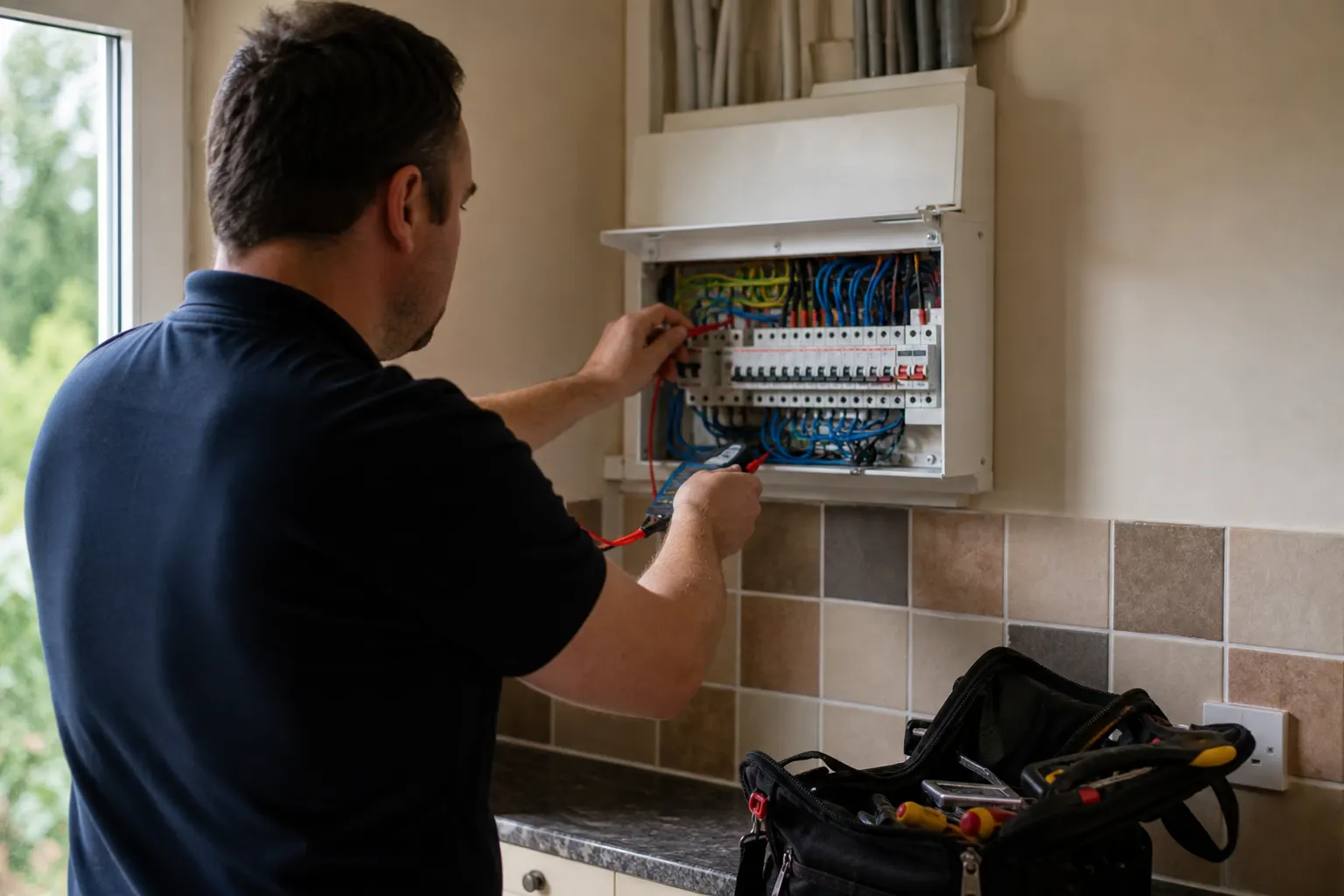
The electrician will start with a visual check, then switch off parts of the installation to carry out tests. Expect the power to go off for periods, so save work on computers and plan around anything that needs to stay on, such as a freezer or medical equipment.
They will open the consumer unit, test circuits, check earthing and bonding, and inspect a sample of accessories. In some cases they may need to lift a few floorboards or remove cover plates. Larger properties and older wiring take longer than small flats with newer installations.
You will normally get the written report after the visit, not on the spot, because the results need to be recorded and checked.
Understanding the result and remedial work
The report gives an overall outcome of satisfactory or unsatisfactory. Observations are coded. C1 means danger is present and needs immediate action. C2 means potentially dangerous. C3 means improvement is recommended. FI means further investigation is needed.
An unsatisfactory result is not a disaster, but it does mean remedial work must be done. Once the work is complete, the electrician should confirm it in writing, often with an electrical installation certificate or minor works certificate for the repairs. Keep these with the original report. Landlords usually have to give tenants a copy of the report, and the local authority may ask for it, so check GOV.UK for what applies to you.
What affects the cost
Prices vary because the work varies. An electrician may charge a fixed price for the report, an hourly rate, or a callout fee plus time. What moves the cost most is the number of circuits and consumer units, the size and age of the property, and how easy it is to get at the wiring.
Other factors include whether the visit is at a normal time or out of hours, the condition of the installation, and whether outbuildings are included. Remedial work is usually priced separately, including parts. Ask for a written quote that says clearly what the report covers and how any extra work will be charged.
Common questions
Can I get an EICR online?
You can arrange it online by sending an enquiry and agreeing a date, but the inspection must be done in person at the property. Be cautious of anyone offering a report without visiting.
Can a landlord be fined for no EICR?
Yes, landlords who fail to meet their obligations for electrical safety checks can face enforcement action from the local authority, which may include financial penalties. Rules can change, so check GOV.UK for the current position.
Can any electrician do an EICR?
No. The electrician should be competent in periodic inspection and testing. Ask about their qualifications, scheme membership and insurance before booking.
How long does an EICR certificate last?
The report states a recommended date for the next inspection. For rented homes the usual maximum is five years, and the report may recommend a shorter period depending on the installation's condition.
Useful sources
- NICEIC: The electrical contracting body, with a register to check an electrician.
- GOV.UK: electrical safety standards in the private rented sector: The official guidance for landlords, tenants and councils on electrical safety checks.