 Ilford Electrical Services
Guide
How to choose a company for an EICR
Choose an EICR company by checking competence, registration, report quality and a written quote, not by picking the quickest or cheapest option.
- Send a short enquiry
- Covering Greater London
- EICR and related services
Choose a company whose inspector is competent in periodic inspection and testing, can show registration with a recognised scheme, and will give you a written quote and a full report. Do not choose on speed or price alone, because a rushed electrical installation condition report can miss faults that matter. Ilford Electrical Services offers EICR work and covers Ilford and the wider Greater London area, and the checks below apply to any company you consider.
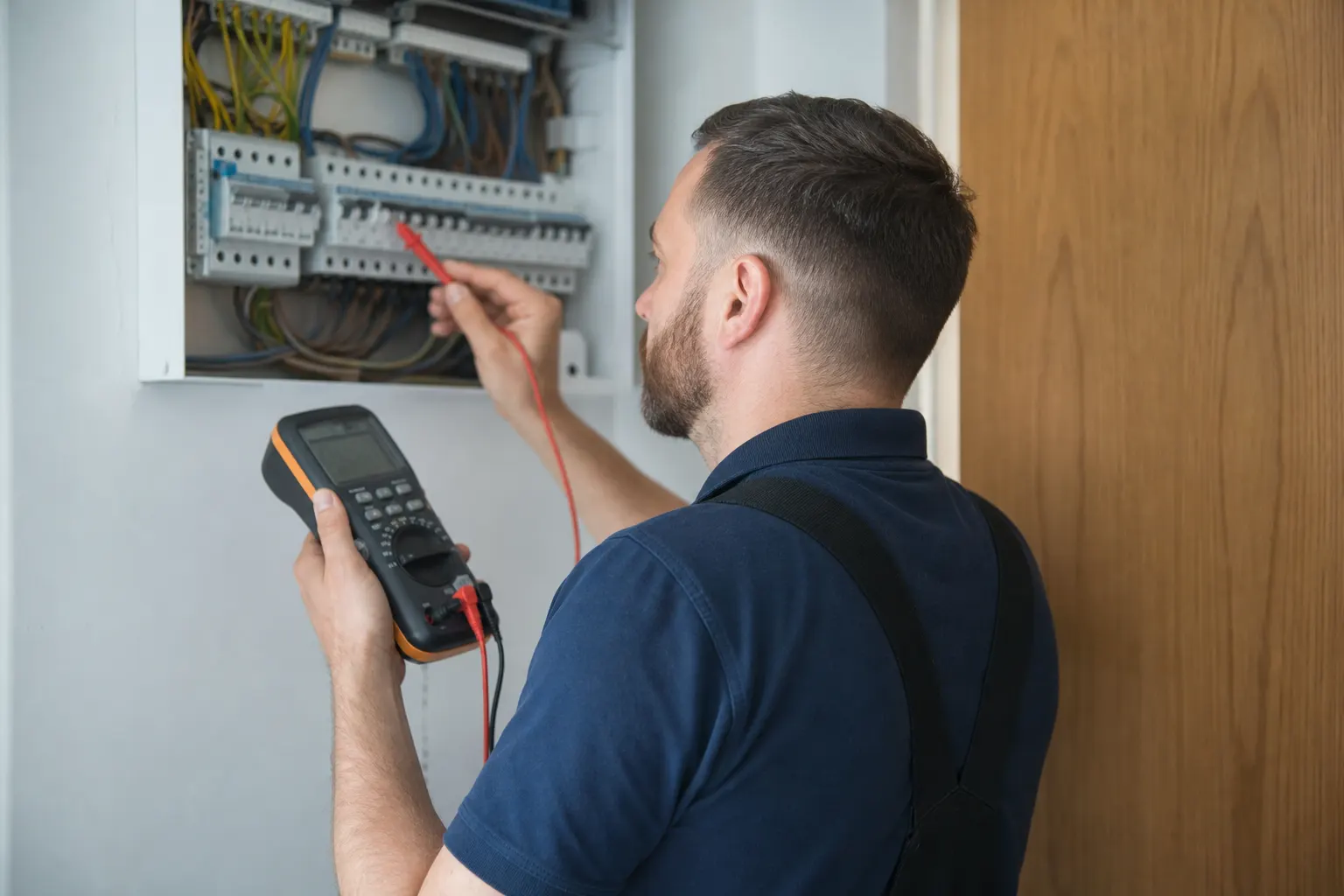
Check competence and registration first
An EICR is an electrical installation condition report. It is a formal inspection and test of the fixed electrical system in a property, and the person signing it needs to be competent to do that. Being a qualified electrician is a good start, but inspection and testing is a specialist task, so ask whether the person carrying out the work has experience in periodic inspection and testing, not only installation work.
Ask whether the company is registered with a recognised competent person scheme, and ask how you can verify it. A genuine electrician will not mind you asking to see ID or checking the scheme's register. It is also reasonable to ask whether they hold insurance for this kind of work.
This is advice for you as the customer. Do not rely on a logo on a van or website alone.
Ask what the inspection will actually cover
Two quotes for an EICR can describe very different jobs. Ask whether the quote covers every circuit that can reasonably be tested, the consumer unit, earthing and bonding, and a sample of sockets, lights and accessories. Ask how they treat areas they cannot reach, such as locked rooms or sealed-off spaces, because anything not inspected should be recorded as a limitation on the report.
Ask what the report will look like. You should get a clear condition report with observations coded by urgency, plus a statement on whether the installation is satisfactory or unsatisfactory. Ask how soon you can expect it after the visit, and whether someone will explain the findings in plain language.
How EICR pricing works
There is no single going rate that fits every property, so be wary of anyone quoting a price without knowing what they are inspecting. Companies may charge a fixed price for the inspection, an hourly rate, or a callout fee plus time. Ask which applies and what is included.
The main things that move the cost are the size of the property, the number of circuits and consumer units, how easy it is to reach fittings and the consumer unit, whether the property is occupied or empty, and how long the inspection takes. Travel, parking and the time of day can also play a part. Any remedial works found by the inspection are usually separate from the inspection itself, covering parts and labour, so ask how those would be quoted.
Always ask for the quote in writing and check what it includes before you agree.
Landlords, tenants and who is responsible
For rented homes, the landlord is generally the person responsible for arranging an EICR and for carrying out any remedial works it recommends. Tenants are normally entitled to see the result. The rules for landlords and the time between inspections can change, so check GOV.UK for the current position for your type of property.
If you own your home, there is usually no automatic duty on you in the same way, but an inspection is still sensible when you buy a property, if the wiring is old, or if you see warning signs such as scorch marks, tripping circuits or flickering lights. Workplaces have their own duties under electricity at work rules, so employers should check what applies to them.
EIC or EICR, and why you cannot do your own
An EIC, or Electrical Installation Certificate, is issued when a new installation or a major alteration is completed. It shows that the work met the standards at that time. An EICR is different: it reports on the condition of an existing installation as it is now. So an EIC does not replace an EICR later on, because wiring ages and gets altered over time.
You cannot sensibly do your own EICR. It needs knowledge of the wiring regulations, suitable calibrated test equipment and the ability to interpret results safely. Landlords and others who need a report for compliance should use a competent third party.
Warning signs to walk away from
Be cautious if a company will not give a written quote, cannot explain what the inspection includes, or offers a certificate without visiting the property. Treat vague answers about registration with suspicion. Be careful with anyone who pushes for unnecessary work during the visit without showing you the observation on the report that justifies it. A good company will show you what they found, explain the urgency and let you decide how to proceed.
Common questions
Can any qualified electrician do an EICR?
Not necessarily. The person should be competent in periodic inspection and testing, with suitable test equipment. Ask about their experience of EICRs and how their registration can be verified.
Do I need an EICR if I have an installation certificate?
An installation certificate covers the work when it was completed. An EICR checks the condition of the installation later on, so the certificate does not replace it. Check GOV.UK if you are a landlord.
Who is responsible for an EICR, landlord or tenant?
For rented property, the landlord is generally responsible for arranging the EICR and any remedial works. Rules can change, so check GOV.UK for the current position.
What should I ask for before agreeing to an EICR?
Ask for a written quote that states what is included, how access limits are handled, how remedial works would be priced, and when you will receive the report.
Useful sources
- NICEIC: The electrical contracting body, with a register to check an electrician.
- Citizens Advice: Free, independent advice on your rights when paying for work.